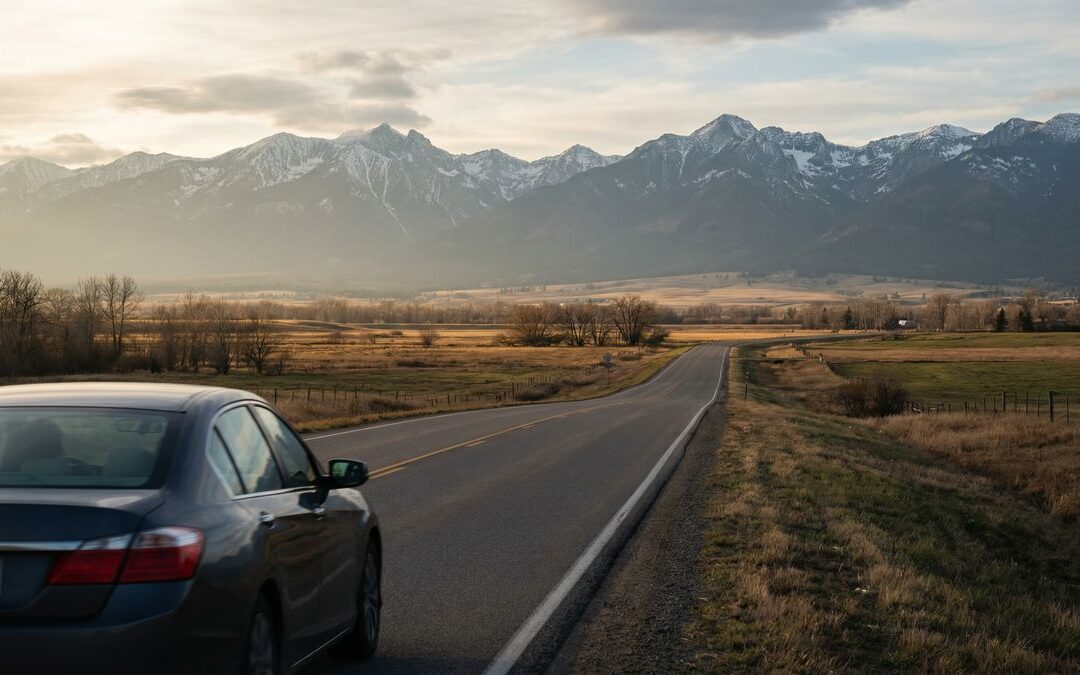
Every spring in Northwest Montana, you can almost watch the traffic change. The snow starts coming off the Mission Mountains, Flathead Lake begins to thaw, and suddenly the highways around Polson, Ronan, and Kalispell start filling up with license plates from everywhere except Montana.
Tourists heading to Glacier. Families on spring break. Visitors towing campers or boats toward the lake. Most of the time, that’s great for the local economy. But it also means something we see every year in personal injury law: more accidents involving out-of-state drivers.
When someone gets hurt in one of these crashes, one of the first questions they ask is usually this: “What happens if the driver who caused the crash isn’t even from Montana?”
The short answer is actually pretty simple. If the accident happened in Montana, Montana law applies. Where the other driver lives doesn’t change that.
Montana Law Still Governs the Case
Whether the crash happened on Highway 93 near Polson, Highway 35 along Flathead Lake, or on a rural road outside Ronan, the rules that determine fault and compensation come from Montana law.
Montana follows what’s called a modified comparative negligence rule. In practical terms, that means responsibility for an accident can be shared between drivers. An injured person can still recover compensation as long as they are less than 51 percent responsible for the crash. If they are partly at fault, their compensation is simply reduced by their percentage of responsibility.
For example, if an out-of-state driver causes a crash but the Montana driver is found to be 20 percent responsible—perhaps because they were speeding slightly—any financial recovery would be reduced by that amount.
Insurance companies spend a lot of time arguing about these percentages. That’s why the details of how the crash happened matter so much.
Why Tourist Drivers Sometimes Cause Accidents
Montana is an incredible place to visit, but our roads can be very different from what visitors are used to. Someone coming from Seattle, Denver, or Southern California might be comfortable navigating city traffic but suddenly find themselves on a rural two-lane highway with no stoplights for miles.
That change can catch drivers off guard. Visitors may not be used to:
- Long stretches of highway with limited passing zones
- Sudden wildlife crossings
- High rural speed limits
- Curving roads along lakes and mountain terrain
- Rapidly changing spring weather conditions
Early spring driving in Montana can be especially tricky. A driver might leave Kalispell on dry pavement and encounter rain, slush, or even leftover ice just a few miles down the road. Drivers unfamiliar with those conditions sometimes make mistakes like following too closely, braking too late, or attempting passes that aren’t safe.
Add in rental vehicles, trailers, GPS distractions, and the excitement of being on vacation, and it’s not hard to see how accidents happen.
Insurance Claims Can Get Complicated
When an out-of-state driver causes a crash, their insurance policy is still responsible for covering the claim. But sometimes dealing with an insurance company based in another state can slow things down. Adjusters may need to coordinate between offices or review Montana laws before fully processing the claim.
Insurance coverage limits can also become an issue. Montana requires drivers to carry at least:
- $25,000 for bodily injury per person
- $50,000 for bodily injury per accident
- $20,000 for property damage
Other states have different minimum coverage requirements, and some drivers carry only the bare minimum. When a serious accident happens and the at-fault driver has limited insurance, injured victims sometimes need to rely on underinsured motorist coverage through their own insurance policy. Most people don’t even realize they have this coverage until they need it.
Evidence Matters After Any Crash
One challenge with accidents involving tourists is that the other driver may leave Montana shortly after the crash—possibly before the full extent of injuries is even known. That makes gathering information right away extremely important.
Helpful evidence often includes:
- Photos of vehicle damage and the crash scene
- Driver and insurance information
- Contact details for witnesses
- Dashcam footage if available
- Road and weather conditions at the time of the crash
In serious injury cases, accident reconstruction experts may also analyze the collision later to determine exactly how it occurred. But the small details collected at the scene—photos, names, road conditions—often become some of the most valuable pieces of evidence.
Insurance Companies Still Try to Shift Blame
Insurance companies don’t automatically accept responsibility for an accident just because their driver was from out of state. In fact, they often look closely at crashes involving tourists. Sometimes they argue that road conditions played a bigger role than driver negligence. Other times they try to shift part of the blame onto the injured driver.
But Montana law still requires every driver on the road to operate their vehicle safely and adjust to the conditions around them. It doesn’t matter whether someone is visiting for a week or has lived here their entire life. Drivers traveling through Montana have the same responsibility as locals to drive carefully and follow the law.
The Bottom Line
Northwest Montana attracts visitors from all over the country—and most of them have a great experience on our roads. But when accidents happen, the important thing to remember is this:
If the crash occurred in Montana, Montana law holds drivers responsible for the harm they cause, no matter where they’re from.
Understanding how those rules work can make a big difference for anyone injured in a crash near Polson, Ronan, Kalispell, or anywhere else in Western Montana. If you’ve been hurt in an accident involving an out-of-state driver, speaking with a local personal injury attorney can help you understand your options and protect your rights.