
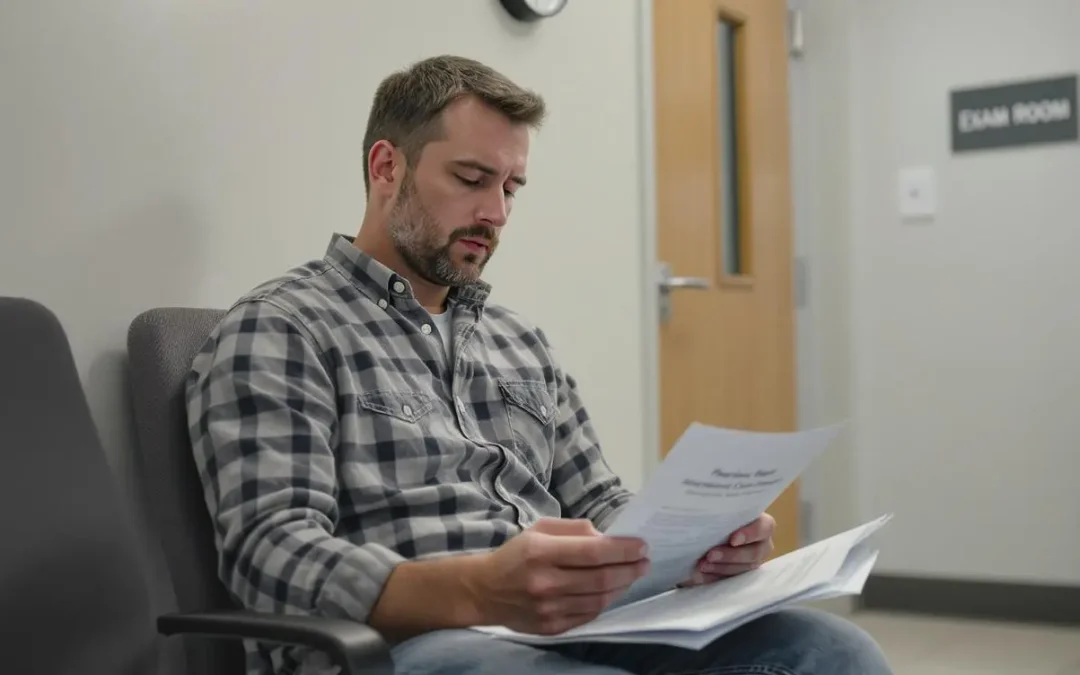
Independent Medical Exams in Montana – What You Need to Know Before You Go
If you’ve been hurt in Montana and you’re getting workers’ comp benefits or pursuing an injury claim, there’s a good chance you’ll eventually get a letter saying you have to attend an “independent” medical exam, often called an IME.
Let me be blunt: there’s almost nothing “independent” about most IMEs.
Insurers use these exams as a tool to cut off benefits, reduce the value of your case, or deny future medical care. That doesn’t mean you should panic, but you do need to take them seriously and know what you’re walking into.
This article explains what an IME is, why insurers schedule them, and what you can do before, during, and after the exam to protect yourself and your Montana claim.
What Is an Independent Medical Exam in Montana?
In a Montana workers’ compensation or personal injury case, an IME is:
- An exam requested and paid for by the insurance company,
- Performed by a doctor chosen by the insurer,
- Used to generate a report the insurer will later use in negotiations, hearings, or trial.
The IME doctor is not your treating doctor. They are not there to provide ongoing care or to help you get better. Their “patient” is essentially the insurance company.
In work comp, an IME might be ordered to:
- Decide if your injury is truly work-related,
- Say you reached maximum medical improvement (MMI) earlier than your treating doctor believes,
- Argue you can go back to work full duty or light duty,
- Dispute whether you need surgery or other expensive treatment.
In a liability case (like a car crash), an IME might be used to:
- Claim your injuries are “minor” or “pre-existing,”
- Dispute the need for future treatment,
- Undercut your credibility at trial.
For a general overview of Montana work comp rights, see:
Understanding Your Rights: Montana Workers’ Compensation Explained
Do You Have to Go to the IME?
Often, yes.
In many Montana workers’ compensation cases, refusing to attend a reasonably scheduled IME can give the insurer an excuse to suspend your benefits. In injury cases, judges can sometimes order you to attend.
That said, the insurer doesn’t get to do whatever it wants, whenever it wants. There are limits on:
- How often they can send you,
- How far you have to travel,
- The type of doctor they can choose.
If you’re being pushed into multiple exams with different doctors, or the exam is hours away when comparable doctors exist closer to your home, that’s a red flag. Those are the situations where it often makes sense to get legal help and push back.
Before the IME: How to Protect Yourself
Here are concrete steps to take before you go:
1. Read the appointment letter carefully.
Who is the doctor? What specialty? What records are they reviewing?
2. Be honest—but prepared.
Make a short timeline:
- Date of injury,
- How it happened,
- Initial treatment and key milestones.
Write down:
- Your current symptoms,
- What makes them better or worse,
- How they affect work, sleep, family life, and hobbies.
3. Do not exaggerate.
If something hurts only with certain movements, say that. If some days are better than others, say that too.
4. Assume you are being watched.
Insurers sometimes use surveillance around the time of IMEs. Be consistent from your driveway to the exam room.
5. Consider talking to a lawyer first.
In a close case, the IME report can be the difference between ongoing benefits and getting cut off.
For more on dealing with insurers after a crash, see:
Top Mistakes To Avoid When Dealing With Insurance Companies After A Montana Accident
During the IME: What to Do (and Not Do)
Remember: you’re not chatting with your family doctor.
Do:
- Arrive on time and be polite.
- Answer questions directly and honestly.
- Describe your pain in plain language: sharp, dull, burning, constant, off-and-on.
- Explain what movements or work tasks make things worse or better.
Don’t:
- Turn the exam into a venting session about the insurer.
- Guess about things you don’t remember.
- Joke about “milking” the injury or being off work.
- Downplay symptoms to seem tough.
If something hurts during the exam, speak up in the moment. If you can only do a movement once or twice before pain spikes, say that too.
After the IME: What Happens Next?
After the exam, the IME doctor writes a report for the insurer. You might never see it unless:
- You ask for a copy,
- You’re in active litigation, or
- Your lawyer requests it.
The report usually addresses:
- Whether your condition is related to the accident or work injury,
- Whether you’ve reached MMI,
- Your work restrictions or ability to return to work,
- Whether treatment like surgery, injections, or therapy is “reasonable and necessary.”
If the IME doctor says you’re at MMI, can work full duty, or don’t need more treatment, the insurer may try to use that to:
- Stop wage loss benefits,
- Deny additional medical care,
- Argue your settlement should be much smaller.
For more on settlements, see:
What is my Work Comp Case Worth – Work Comp Settlement
How I Use (and Fight) IMEs in Montana Cases
In my practice, I see IMEs as just one piece of evidence—often a biased one.
I also look at:
- Your treating doctors’ opinions,
- Imaging (MRIs, X-rays),
- Therapy notes describing your progress and limitations,
- Your work history and job description,
- Your own consistent reporting over time.
Often, we can show:
- The IME doctor spent 20 minutes with you while your treating doctor has seen you for months or years.
- The report leaves out important details you reported.
- The doctor routinely works for insurers and nearly always finds injuries are “mild” or “resolved.”
When that story is told clearly, judges and juries in Montana understand the dynamic.
When to Call a Montana Injury Lawyer About an IME
You should at least consider talking to a lawyer if:
- The IME report says you’re “fine,” but you’re clearly not,
- Your benefits were cut off right after the IME,
- You’re being sent to multiple IMEs by different doctors,
- The insurer wants you to travel an unreasonable distance,
- You’re being pushed back to work before you feel safe.
For many injured Montanans, an IME is the turning point in their case. If you’re facing one—or already went to one and things went sideways—you don’t have to navigate it alone.